Financial Lessons to Learn from Ultra Trail Running
Godfried Kotzé • June 2, 2026

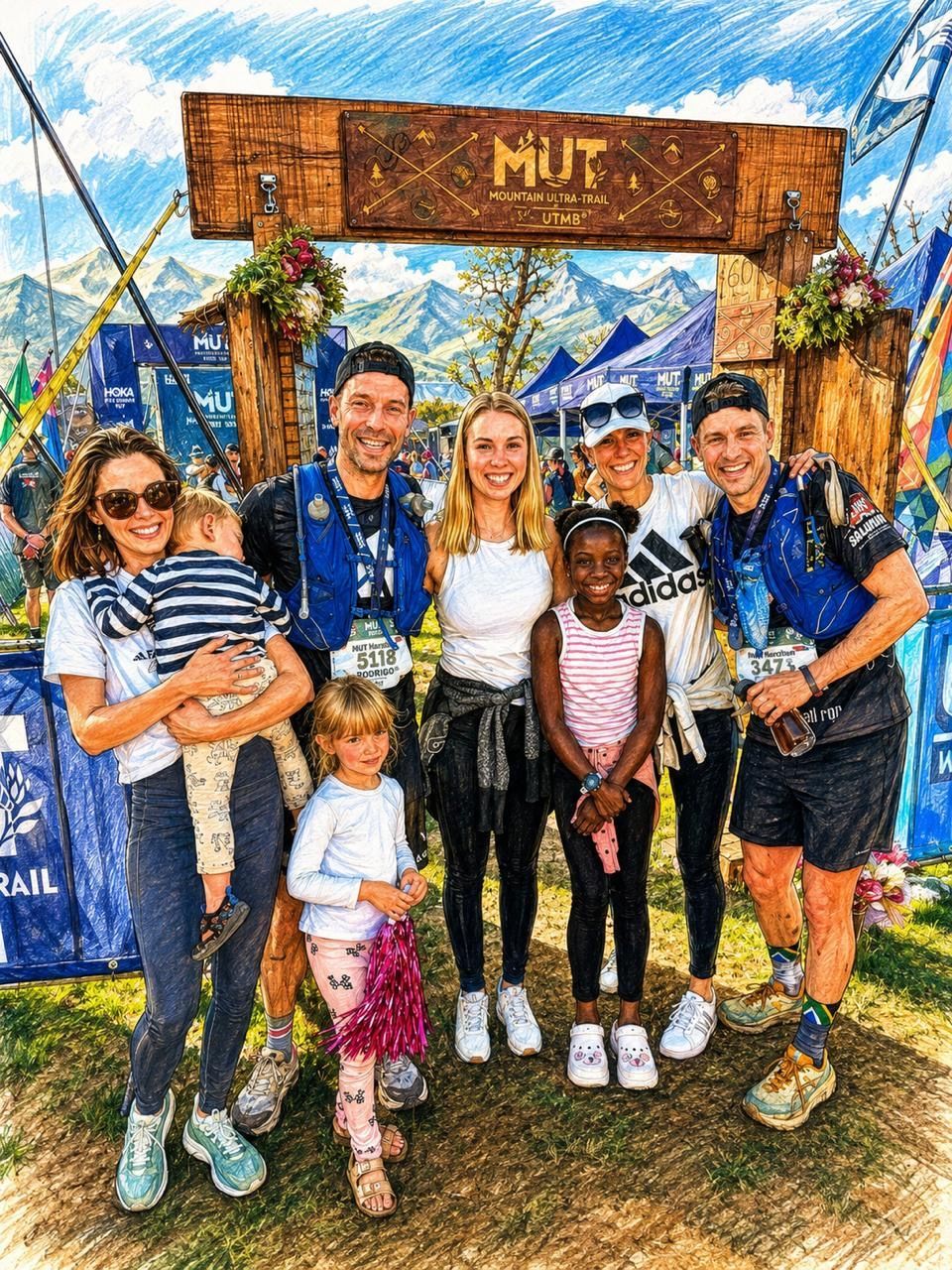
This past weekend, Bovest Wealth Management had the privilege of being part of something truly special: a race, a journey, and a family of runners who took part in the MUT - the Mountain Ultra-Trail - in the breathtaking beauty of George.


Together with my close friend Scotty, I ran the marathon. But as is so often the case with endurance events, I walked away with far more than tired legs and a medal. I walked away with lessons. Lessons about faith, finances, discipline, consistency, community, fellowship, and perspective.


Ultra trail running has a unique way of stripping life back to the essentials. Out there on the mountain, there are no shortcuts. You cannot fake preparation. You cannot outsource endurance. You cannot buy resilience at the final aid station. You have to show up, step by step, climb by climb, kilometre by kilometre.


In many ways, our financial lives are no different.


Discipline: The Foundation of the Journey


No marathon is completed by accident. It requires discipline long before race day. Early mornings, training runs, strength work, nutrition, rest, and preparation all form part of the unseen investment.


Financial success works the same way.


Building wealth is rarely about one dramatic decision. It is about the daily discipline of living within your means, saving consistently, avoiding unnecessary debt, planning for tax, protecting your family, and making wise investment choices over time.

Proverbs 21:5 reminds us:


"The plans of the diligent lead surely to abundance, but everyone who is hasty comes only to poverty."


Discipline is not always exciting, but it is deeply powerful. It is the quiet commitment to the right things, even when nobody is watching. On the mountain, discipline gets you to the next checkpoint. In your finances, discipline carries you toward long-term freedom.


Community: We Were Not Created to Run Alone


One of the most beautiful parts of the MUT weekend was the sense of community. Runners encouraged each other. Families supported from the sidelines. Friends waited, cheered, prayed, laughed, and pushed one another forward.


With Scotty alongside me, the journey became lighter. The difficult moments became bearable. The experience became richer.

The same is true in our financial lives. We need people around us who encourage wisdom, accountability, and growth. A good financial adviser, tax specialist, fiduciary expert, family member, spouse, mentor, or trusted friend can help us make better decisions and remain focused on the bigger picture.


Ecclesiastes 4:9-10 says:
"Two are better than one; because they have a good return for their labour. For if they fall, the one will lift up his fellow;..."


No one builds a meaningful legacy alone. Wealth is not only about numbers on a statement. It is about people, purpose, stewardship, and responsibility.


Perspective: Seeing the Creator Through His Creation


Perhaps the greatest takeaway from the weekend was perspective.


Running through the beautiful mountains of George, surrounded by the majesty of creation, one cannot help but become aware of the greatness of God. The fresh air, the views, the silence, the strength to continue, and the people alongside us all point to something far bigger than ourselves.


There were moments on the route where the mighty Name of the Lord could change the entire atmosphere. A prayer, a word of gratitude, a moment of worship, or simply lifting one's eyes to the mountains reminded me that we are not alone.

This perspective is essential in life and in finance.


Money is important, but it is not ultimate. Planning is important, but God remains our provider. Wealth can create comfort, but only Christ gives true peace. A well-structured estate can leave an inheritance, but a life of faith leaves a legacy.


When we see our finances through the lens of faith, everything changes. We become less anxious, more generous, more intentional, and more aware of the responsibility we carry.


The Finish Line Matter


Every race has a finish line. So does every financial journey.


The question is not whether we will reach a finish line, but whether we are preparing wisely for it. Are we disciplined? Are we consistent? Are we surrounded by the right people? Are we walking in fellowship? Do we have the right perspective?


Ultra trail running teaches us that endurance matters. Preparation matters. Community matters. Faith matters.


The same is true when building, protecting, and transferring wealth.


By Godfried Kotze
BCom Accounting, MCom Taxation (UP), SAIPA, FISA Member


By PJ Botha July 3, 2026
Dear Client, Tax season is here again, and many South Africans will receive an auto-assessment from SARS. Auto-assessments can be very convenient. SARS uses information from employers, medical schemes, retirement funds, banks and investment providers to pre-populate your tax return. In many cases, this makes the process quicker and easier. However, easier does not always mean correct. We have already seen cases where auto-assessments were not fully accurate or where important information still needed to be checked. That is why our message this tax season is simple: don’t just accept your SARS assessment without reviewing it properly first. Between 1 July and 12 July 2026, SARS will notify selected taxpayers by SMS or email if they have been auto-assessed. The notice will show whether you are due a refund, whether you need to pay SARS, or whether there is no amount payable or refundable. If you receive an auto-assessment and everything is correct, you do not need to submit a separate return. But before accepting it, you should still log in to SARS eFiling and check the details carefully. If something is incorrect or missing, you should update and submit your tax return through eFiling. A few practical tips for tax season Before accepting or submitting anything, make sure you have the correct supporting documents on hand. These may include your IRP5, medical aid tax certificate, retirement annuity contribution certificate, investment tax certificates, tax-free investment certificate, donation certificates, rental income records and any other relevant supporting documents. Do not only look at the refund or amount payable. It is tempting to focus only on whether SARS says you are getting money back, but the more important question is whether the information behind the assessment is correct. Check that your personal details and banking details are up to date. Incorrect banking details can delay refunds, while outdated contact details may mean you miss important communication from SARS. Keep your supporting documents for at least five years from the date of submission, as SARS may request them later to verify your return. What to look out for on your investments Investment income is an area where clients should be especially careful. SARS may receive information directly from financial institutions, but you should still compare the information on your return with your tax certificates. Here are a few important items to check: Interest income Check whether all local and foreign interest has been included correctly. Even small interest amounts from bank accounts or money market investments can form part of your taxable income. Dividends and foreign dividends Local dividends are generally subject to dividends tax, but they may still appear on your tax certificate. Foreign dividends can have different tax treatment and should be reviewed carefully. Capital gains and losses If you sold or switched investments during the tax year, there may be a capital gain or loss. This can happen even if you did not withdraw the money into your bank account. For example, switching between funds can sometimes trigger a disposal for capital gains tax purposes. Retirement annuity contributions Make sure your retirement contributions are correctly reflected. If your contributions were more than the amount allowed as a deduction for the year, the excess amount may be carried forward and used in future years. Your notice of assessment, known as the ITA34, should reflect this. Tax-free investments Although growth and income in a tax-free investment are not taxed, your contributions still need to be monitored. Make sure your tax-free investment certificate is correct and that you have not exceeded the annual or lifetime contribution limits. Living annuity income If you receive income from a living annuity, check that the income and PAYE deducted are correctly reflected. It is also important to keep your tax affairs up to date, as SARS can recover outstanding tax debts directly from certain third parties, including income providers. Two-pot retirement withdrawals If you made a withdrawal from the savings component of your retirement fund, this amount is taxed at your marginal income tax rate. Your fund administrator should issue an IRP5 or IT3(a) certificate showing the withdrawal and any tax withheld. Be careful not to assume that the tax deducted at the time of withdrawal fully settles your final tax position. If you also earned other income during the year, such as a bonus, rental income or investment income, you may still have additional tax to pay when your return is assessed. A simple checklist before you accept or submit Before finalising your tax return, ask yourself: Have I checked my SARS auto-assessment in detail? Have I compared the SARS information to my actual tax certificates? Are all my sources of income included? Are my investment certificates reflected correctly? Are my retirement contributions correct? Have I checked whether any capital gains or losses apply? Have I included medical aid, donation or other allowable deductions where relevant? Are my banking and contact details correct? Have I saved my supporting documents? Tax season does not need to be stressful, but it does require care. SARS has made the process more automated, but the responsibility to ensure your return is complete and accurate still remains with you. Taking a few extra minutes to check your assessment properly can help you avoid delays, unexpected tax bills or corrections later. PJ Botha CFP ® CA(SA)
By Geo Botha July 2, 2026
Comrades... what an experience. Not just the race itself, but the entire 10-month journey. Life is simply more fulfilling when we step beyond our comfort zones—when we take on something that requires effort, discipline, and commitment. The race itself was somewhat of a blur, and somehow those 9.2 hours went by remarkably fast.  What stood out most was the incredible support along the route and the camaraderie among fellow South African runners. People from all walks of life, united by a single goal. It's difficult to put into words. As I reflected on the journey, I couldn't help but notice how much running the Comrades is like Long-term investing . Both are marathons, not sprints. The following 3 things almost Guarenteed my Comrades success, even before I started the race, following the same guidelines in investing and you will achieve your goals: Get a coach.. The first thing I did after I entered for the Comrades was to get a reputable, experience coach. Someone who knows exactly what it takes and what I will need to do to cross the finish line. He knew my strengths and weaknesses, gave me a personal week by week plan and was always there for feedback and advice. The role of an advisor/coach/ mentor can not be understated. There is a reason why all the gold and silver winners have a coach and personal plan, while the last batch try to wing it and do it themselves. 2. Surround yourself with like-minded people. The 2 nd thing I did was to get a “running parter” by convincing someone to do it with me. The road to Comrades requires discipline and dedication. There’s going to be times when you are ‘gatvol’ and want to sleep in and skip sessions – that’s when you need an accountability partner. Someone who understands your experience and that’s working towards the same goal, and you are. People will I push you down or lift you higher – make sure you have the right people in your corner 3. Consistency over everything else. Getting ready for the Comrades requires consistency and discipline over an extended period. You cannot start training for the Comrades in March and say you will to twice as much as the other runners, it doesn’t work that way. Success in fitness and in finance doesn't come from one great day— it comes from consistently showing up, taking small steps, gradually laying the bricks, even when you don't feel like it. If you incorporate these 3 key steps into any ambitious goal you might have, you eliminate the chances of failing and you will be guaranteed success over the long term. Geo Botha CFP ®