
Suid-Afrika Verower F-Ope-Wêreldtitel

Diana Martens • August 25, 2026

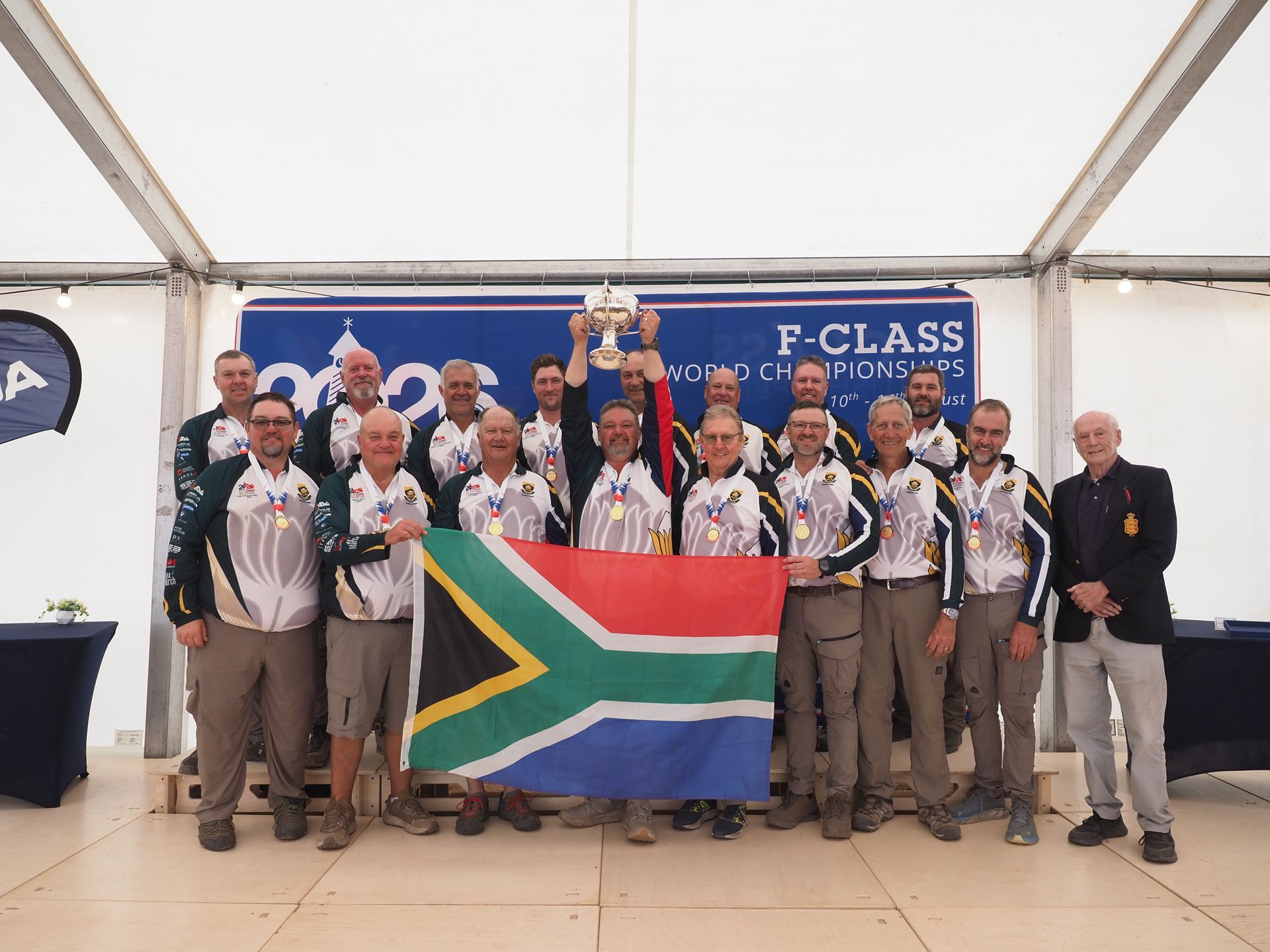
Suid-Afrika se Protea F-Ope-span het homself as die beste ter wêreld bewys deur die VSA met 18 punte te klop en die F-Ope-spanwêreldtitel (die Farquharson-beker) te verower. Die sewende F-Klas-wêreldkampioenskap is van 10 tot 16 Augustus by die National Shooting Centre in Bisley, Engeland, gehou, met meer as 220 skuts van meer as 19 lande wat aan die individuele kompetisie deelgeneem het en tien 

nasionale spanne wat om die spantitel meegeding het. 


Dit was 'n besondere prestasie: die VSA word as een van die sterkste F-Ope-lande ter wêreld beskou, met 'n groot poel skuts en uitstekende toerusting, en het reeds die wêreldtitels van 2017 en 2023 gewen — albei kere met slegs vyf punte. Spankaptein Jan Swanepoel het gesê die 18-punt-oorwinning dié keer wys hoe goed die Suid-Afrikaanse span dwarsdeur die wedstryd gevaar het. 


Die span, bestaande uit 12 skuts, twee windafrigters, 'n kaptein en 'n bestuurder, het op die eerste dag reeds 'n sterk indruk gemaak deur op 800 m en 900 m uitstekend te skiet ondanks moeilike windtoestande — 'n prestasie wat die span 'n 25-punt voorsprong op dag een besorg het. Volgens Swanepoel was dit nie een spesifieke skoot wat die titel verseker het nie, maar eerder die somtotaal van baie goeie besluite, 

konsekwente skietwerk en spanwerk oor die hele kampioenskap. 


Onder die skuts wat namens Suid-Afrika gekompeteer het, was Werner Prinsloo — 'n kliënt van Bovest. 
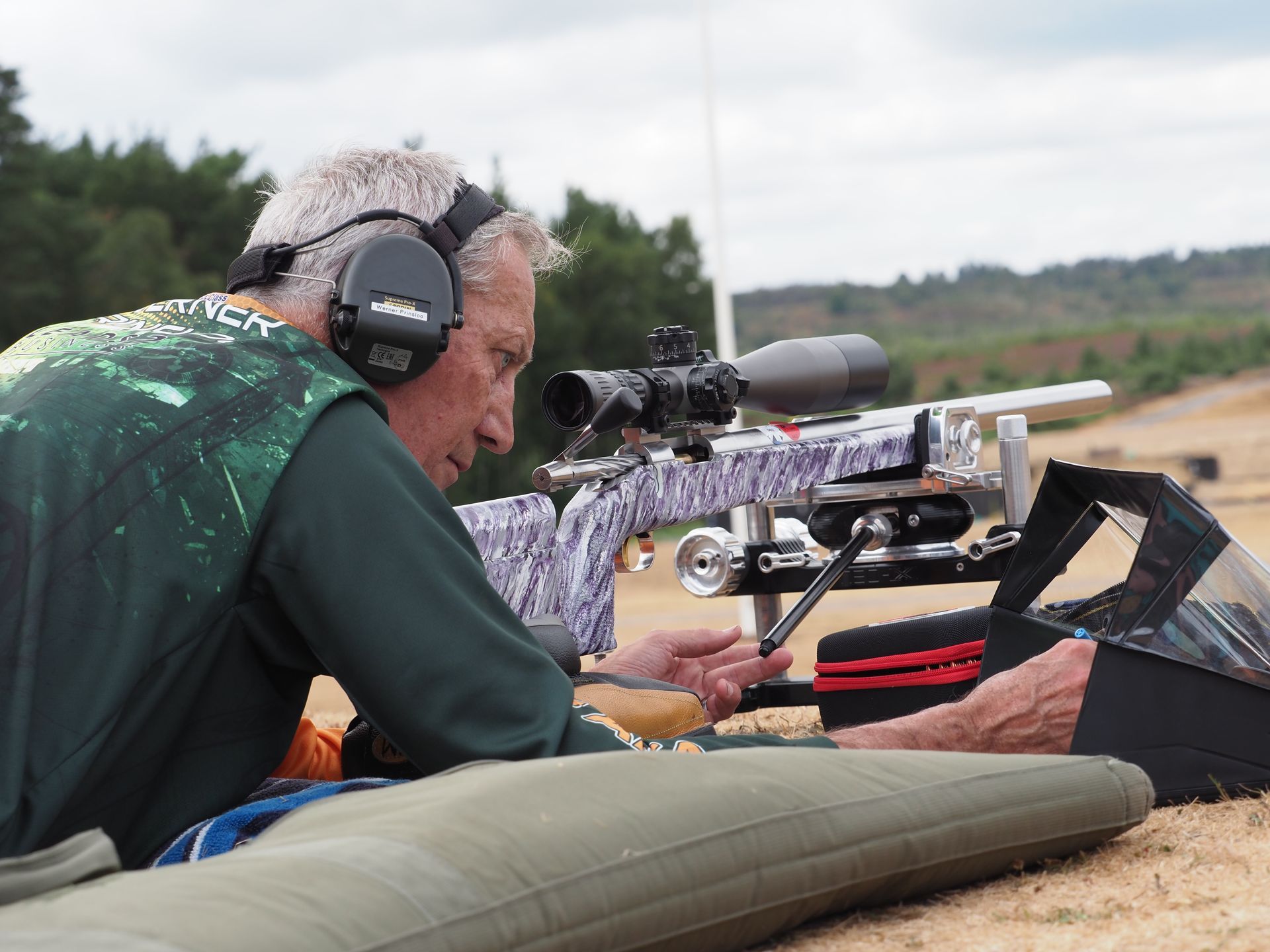

Werner Prinsloo in aksie 


Oor F-Ope 

F-Ope is 'n vorm van langafstand-presisieskiet waarin skuts met teleskoop-toegeruste gewere (wat nie swaarder as 10 kg mag wees nie) oor afstande van 800, 900 en 1 000 tree — ongeveer 700 tot 900 meter — na 'n teiken skiet. Skuts moet binne ongeveer 45 sekondes ná die vorige skoot skiet en kan dus nie wag vir 'n 'perfekte' windtoestand nie. Die vermoë om wind en ander baanveranderlikes akkuraat te lees, speel dus 'n net so groot rol as die skut se eie vaardigheid. 


Die Suid-Afrikaanse span was: Frikkie Coetzee, Chrisjan Diedericks, Carel du Plessis, Bernard Engelbrecht, Stefan Koekemoer, Rob Lishman, Kolver Mulke, Werner Prinsloo, Stefan Steyn, Jason Terblanche, Victor Terblanche en Andrew Toy. 
By Bovest Admin • November 18, 2026
Here’s what active and passive investing mean in plain language, and how to make sure every investment you own has a clear purpose.
By PJ Botha • November 3, 2026
In conversations with people, and increasingly in the media, I hear the same message: “Just put everything in the S&P 500. Over time, it will all balance out.” There is sound reasoning behind investing in a broad share index over several decades. But that advice can overlook something important: your investment horizon and your ability to stay invested when markets fall. Even investors with decades ahead may need some of their money much sooner. During the dot-com crash, the S&P 500 fell approximately 49% from its peak in 2000 to its low in 2002. Imagine watching an investment of 1 million fall to roughly 510,000, excluding dividends and currency movements. It is easy to say you would remain invested; experiencing it can feel very different. Even the eventual winners suffered. Amazon’s share price fell approximately 94% between December 1999 and September 2001. An investment of $100,000 would temporarily have been worth around $6,000. Amazon survived and eventually flourished, but other businesses did not: Webvan and eToys entered bankruptcy in 2001, with shareholders facing the loss of their entire investment. Recovery is possible for a broad market; it is never assured for an individual company. If you need to draw an income, fund a major expense or simply find the losses unbearable, you may be forced—or tempted—to sell before markets recover. Different markets followed different paths. While US shares struggled, the JSE All Share initially rose approximately 52% between March 2000 and May 2002, before falling around 37% by April 2003. At that low, it was approximately 4% below its March 2000 starting level, excluding dividends. South Africa provided diversification, but its market still experienced a substantial decline along the way. Bonds also played an important role. Over the three calendar years from 2000 to 2002, US 10-year Treasury bonds delivered a cumulative return of approximately 42% in dollars, while South Africa’s All Bond Index returned approximately 63% in rand, including reinvested income. These are full-period returns, rather than peak-to-trough figures, but they show how different asset classes can support a portfolio when shares struggle. The Rand added another layer. It started 2000 at approximately R6.12 to the dollar and weakened dramatically, briefly reaching around R13.85 in December 2001. It subsequently recovered, briefly revisiting roughly R6.10 in December 2003 and trading around those levels again in July 2004. Rand weakness initially cushioned offshore losses for South African investors; the subsequent strengthening worked in the opposite direction. Moving offshore after a sharp currency decline can therefore introduce its own risks. Artificial intelligence (AI) is creating exciting opportunities today. The internet boom offers a useful reminder: a technology can change the world without every investment in it delivering a good return. The price paid and the expectations built into that price still matter. This does not mean a similar crash is imminent, or that investors should avoid the S&P 500. It means that an investment can be a useful part of a portfolio without being the right place for all your money. At Bovest, we build portfolios around your goals, income needs and investment horizon. Diversification across companies, sectors, countries, currencies and asset classes cannot prevent every loss, but it can reduce dependence on one outcome. The best portfolio is one that supports your financial goals—and that you can live with when markets become uncomfortable.